
Guides
Thickness and applications
Laminam slab thickness determines which surfaces the material can be intended for. That is why thickness is the first technical criterion set after choosing the application.
This guide explains how to choose a suitable thickness, where individual thicknesses are most often used and what to check before choosing a material.
The table does not replace a project check. The final choice always depends on the structure, installation method and requirements of the specific project.
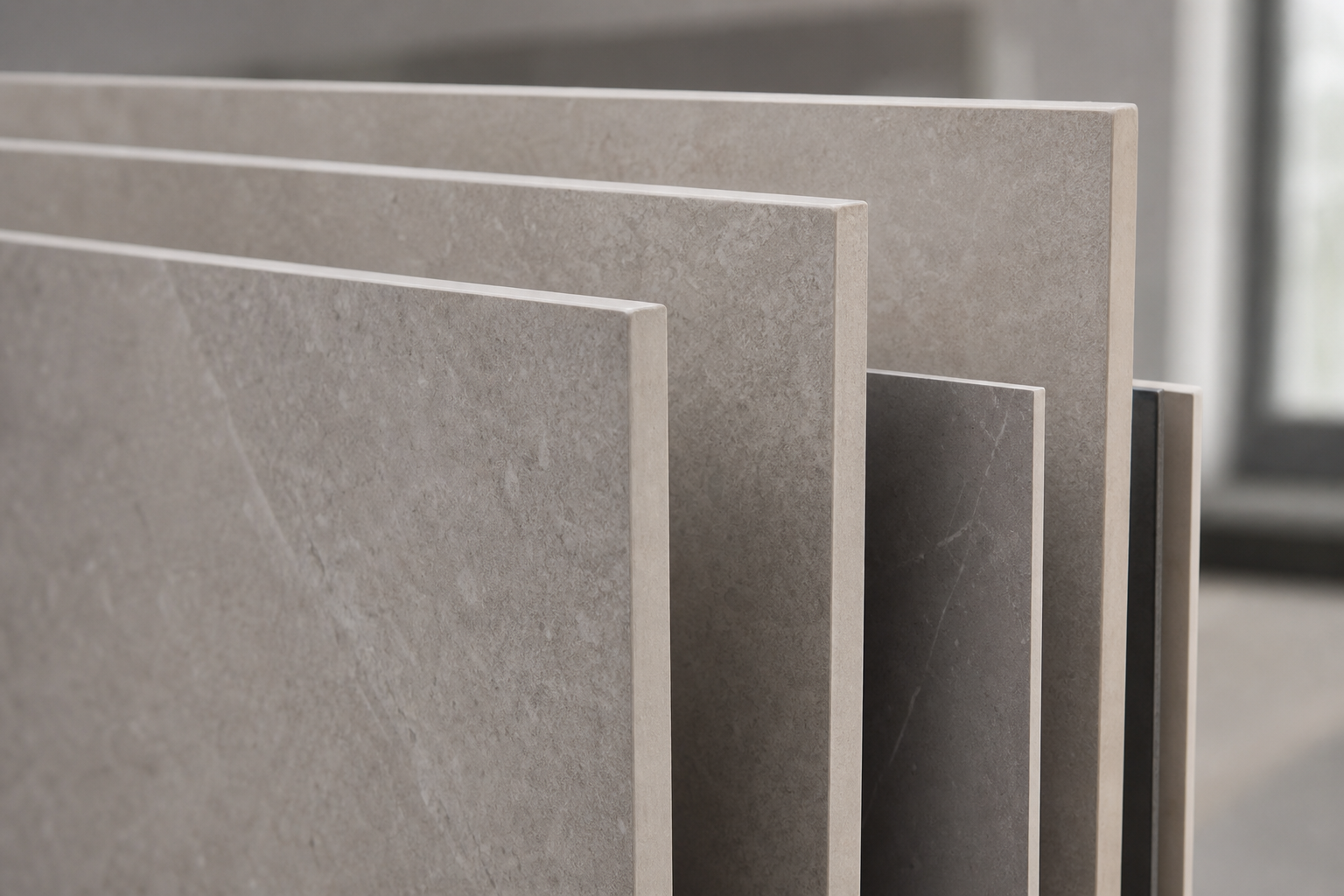
Thickness comes after application
Different applications have different requirements for load capacity, installation method and expected load. From those requirements the suitable slab thickness is determined.
When thickness is known, the choice narrows to materials available in that thickness.
What does selection look like?
- Application
- Suitable thickness
- Materials available in that thickness
- Finish
- Format
- Check with the workshop and installer
- Order
Why do different thicknesses exist?
Different surfaces have different requirements.
Wall cladding, a kitchen worktop and a staircase do not take the same loads and are not installed the same way. That is why Laminam was not developed in one universal thickness, but in several thicknesses for different types of application.
Below you can see where individual thicknesses are most often used.
Overview by application
The overview is organised by the surface you are fitting out. The table shows thicknesses most often considered for different application types.
The final choice depends on structure, installation method and the requirements of the specific project.
| Application | Thicknesses | Note |
|---|---|---|
| Kitchen worktops | 12+, 20+ | For counters, islands and horizontal work surfaces. |
| Bathroom vanity tops | 12+, 20+; 5+ uz potporu | A thinner slab needs a properly designed substrate. |
| Wall cladding | 2+, 3+, 5, 5+ | For interiors, kitchen splashbacks and bathroom walls. |
| Floors | 5, 5+, 12+, 20+ | The surface finish is also checked, especially in wet zones. |
| Facades | 3+, 5, 5+, 12+, 20+ | Thickness depends on the facade system and fixing method. |
| Furniture cladding | 2, 3, 3+, 5, 5+ | For doors, fronts and cladding of elements. |
| Tables | 12+, 20+ | Thinner slabs only with suitable structural support. |
| Pools | 2+, 3+, 5, 5+, 12+, 20+ | Falls, waterproofing and finish are checked in particular. |
| Stairs | 12+, 20+; 5, 5+ za ivicu | Tread, landing and edge profile are not resolved with the same thickness. |
Overview by thickness
If you already know which thickness you are considering, this table shows where it is most often used.
Availability of individual materials in a given thickness is checked on the specific material page.
| Thickness | Where it is considered |
|---|---|
| 2 | 2,2 mm | twO by Laminam. Wall cladding, facades and furniture cladding. Not for worktops or floors. |
| 2+ | 2,6 mm | twO by Laminam. Walls, facades and pools. Check the material and bonding method for external use. |
| 3 | 3 mm | Furniture cladding and tables with suitable structural support. |
| 3+ | 3,5 mm | Wall cladding, ventilated facades and interior surfaces where small thickness matters. |
| 5 | 5,8 mm | Floors, walls, facades, furniture cladding and stair nosing. |
| 5+ | 6,2 mm | Floors (recommended minimum), walls, outdoor walkways, vanity tops with support, pool edge and stair nosing. |
| 12+ | 12,5 mm | Worktops, kitchen islands, tables, furniture, stair treads and pool elements. |
| 20+ | 20,5 mm | Worktops and elements that need higher load capacity, a thicker edge or greater load. |
twO by Laminam (2 and 2+)
twO by Laminam covers ultra-thin ceramic slabs 2 and 2+ mm thick, intended primarily for wall cladding, renovation and projects where small thickness and weight matter.
They are not intended for every type of application. Check whether they suit the planned surface.
Availability depends on the material and is always checked on its page.
For applications, bending, handling and installation, see the separate twO by Laminam guide.
What follows after choosing thickness?
When you have determined the appropriate thickness, the next step is choosing the material.
On each material page you can check which finishes are available and in which formats they are produced.
Before final ordering, align with the workshop the cutting plan, edge finishing, joint layout and ability to bring slabs into the building.
Before ordering
When you have chosen thickness and material, we recommend checking the following:
- Whether the desired finish and format are available for the selected material.
- Whether the cutting plan matches the project and slab dimensions.
- Whether the selected format can be safely transported and brought into the building.
- Whether fabrication and installation details are aligned with the workshop and installer.
That way the material you order will match the project and be ready for fabrication and installation.
FAQ
No.
Thickness is chosen according to the surface where the material will be used, as well as the installation method and expected load.
No.
Availability depends on the specific material. Each material page shows the thicknesses in which it is available.
You can, but we recommend defining the application and suitable thickness first.
That way the choice narrows to materials that truly meet the project requirements.
In rare and isolated cases it is possible to produce a material in a format (dimension and thickness) not listed in the catalogue, if the factory has the technology to make that material in the selected finish and requested format.
If that is not the case, that material is no longer a safe choice for your project, and another selection is advised.
No.
Greater thickness does not mean a better material. Different thicknesses were developed for different types of application and load.
When you have determined the appropriate thickness, the next step is choosing materials.
On each material page you can check available finishes, formats and technical information.
Next
- What is Laminam?The full selection process, from application to order.
- MaterialsCheck available finishes, formats and thicknesses per material.
- Applications by spaceKitchens, bathrooms, facades, floors, stairs and furniture.
- DocumentationTechnical guides for fabrication, cutting and twO by Laminam.
- Price listIndicative slab price range by thickness.